Call Us Today +98 (21) 8822 9156 - 9404|info [at] rcuwm.org.ir

Publication: Women’s Participation in Water Management

Home/Publication: Women’s Participation in Water Management/

Publication: Women’s Participation in Water Management


Publication: Women’s Participation in Water Management

Date: 2004

The proceedings of the Workshop on «Women›s Participation in Water Management» held by RCUWM- Tehran and the Office of Women›s Affairs of the Ministry of Power-Islamic Republic of Iran in March 2004 in Tehran was published by RCUWM- Tehran.

This collection includes 15 articles on the following themes:

Role of Women in Promoting Quantitative and Qualitative Water   Management

Development of Women›s Participation in Agricultural Water Management

The Role of Women›s Participation in Optimizing Urban Water Consumption Pattern

The Role of Women in Environmental Management
2019-09-04T02:52:51+04:3019th August, 2004|

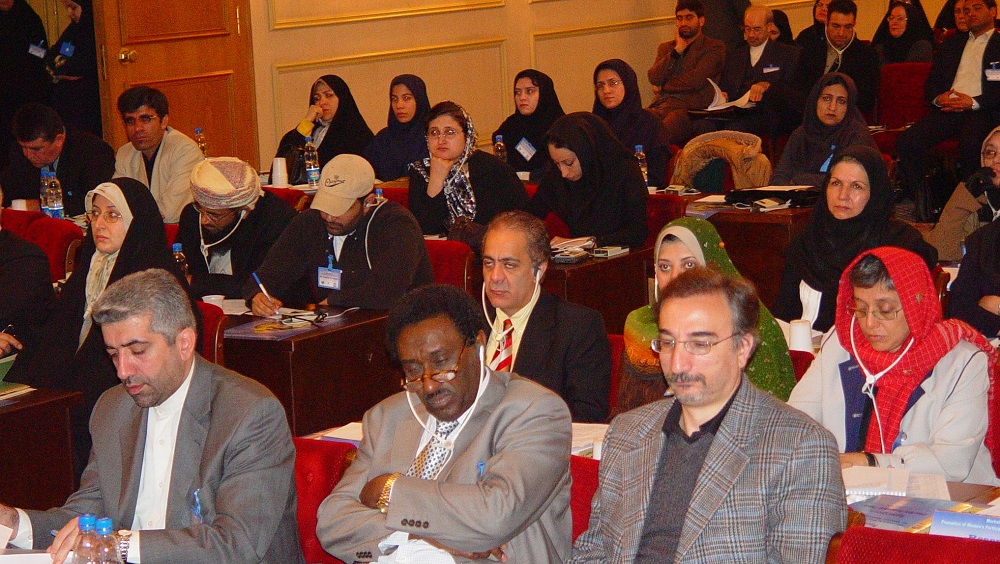
Workshop: Promotion of Women’s Participation in Water Management

Date: 23 -24 February 2004

Venue: Tehran, Iran

Co-organizers: RCUWM-Tehran, Ministry of Energy

Participating Countries/ Organizations: Germany, Iran, Jordan, The Netherlands, GWA, RCTWS-Cairo, TIWA, UNESCAP, UNESCO

Number of Participants: 85

Number of Female Participants: 63 (74%)

Objectives/Outcomes:

  • Establishing a conductive environment for women’s participation
  • Reiterating the necessity of making more cooperation as operational means aimed at gender mainstreaming
  • Emphasizing on creating more opportunities for women in managerial and decision making sectors.
  • Promoting women’s training in different technical fields
  • Establishing women communities within governmental organizations
  • Establishing a unit of gender information in water affair section of Ministry of Energy or other Ministries to provide the possibility of generating […]
2019-09-18T13:52:40+04:3023rd February, 2004|

Master Plan Study on Water Management in Kabul River Basin

Date: January – December 2004

Objectives/Outcomes:

  1. Analysing existing water resources conditions of Kabul basin;
  2. Water resources and demand assessment
  3. Analysing the options and selecting the best feasible projects for fulfilment of water demands with taking the environmental requirement into consideration
  4. Preparing the following plans with taking the natural, technical, socio- economical and financial constraints into account:
  • Developing agricultural and irrigation plans and water resources development projects;
  • Urban and industrial water supply plans;
  • Water quality management plans;
  • Demand management plans;
  • Basic data and information acquisition plans.

2019-09-21T11:07:07+04:301st January, 2004|

Second Governing Board Meeting

17th December 2003

Tehran, Iran

Participating Countries and Organizations

  • Bangladesh, Egypt, Germany, Iran, Kuwait, Lebanon, Oman, Syria, Tajikistan, UNESCO, UNESCO-IHE, International Water Association (IWA), Wageningen University and Research Centr

Objectives:

  • The organisational chart of RCUWM-Tehran was approved
  • The proposed workplan and budget for the year 2004 was approved
  • In addition to the proposed projects the two following specific projects were also approved to be implemented
    • assessment of training needs in the region
    • arsenic contamination of groundwater resources in Bangladesh
  • It was agreed that all members would provide their written suggestions and confirmation of their contribution in the […]

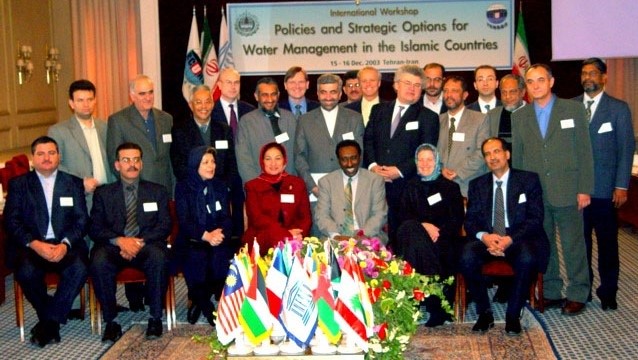
International Workshop: Policies and Strategic Option for Water Management in the Islamic Countries

Date: 15 – 16 December 2003

Venue: Tehran – Iran

Co-organizers: RCUWM-Tehran, IDB

Participating Countries/Organizations: Bangladesh, Egypt, France, Iran, Jordan, Libya, Malaysia, Oman, Tajikistan, The Netherlands, Turkey, and Yemen

Number of Participants: 38

Number of Female Participants: 3 (7%)

Objectives/Outcomes:

  • Water and Environment
  • Water Resources Management in Critical Conditions
  • Shared Water Resource Management
  • Participatory Water Management

Several issues including importance of exchanging knowledge and experiences, capacity building, research, education, participatory approaches in water management and global attention to integrated water resources management were highlighted subjects considered in the concluding remarks, the proceedings of the above-mentioned symposium was published and disseminated by UNESCO-IHP within the framework of technical documents […]

2019-09-18T13:39:57+04:3015th December, 2003|

Training Workshop: Water Demand Managements (WDM)

Date: 6 -19 September 2003

Venue: Power and Water Institute of Technology, Tehran, Iran

Co-organizers: RCUWM-Tehran, UNESCO

Participating Countries/Organizations: Bahrain, Fiji, Iran, Malaysia Oman, Pakistan, Uzbekistan

Number of participants: 22

Number of Female Participants: 5 (23%)

Objectives/Outcomes:

  • Making the participants familiar with principles and concepts of Water Demand Management by presenting good practices and case studies in the region
  • Transferring new approaches from developing countries to the states in the region
  • Strengthening national capabilities of the participation in the formulation and implementation of activities related to different aspects of Water Demand Management

2019-09-18T13:44:27+04:301st September, 2003|

Water and Wastewater Technology

Workshop: Water and Wastewater Technology

Date: 30 August – 3 September 2003

Venue: Tehran, Iran

Co-organizers: RCUWM-Tehran, BMBF – Germany

Participating Countries/Organizations: Consulting Engineering Companies and Universities, Environmental Conservation Organization, Regional Water Authorities, Water and Wastewater Companies

Number of Participants: 24

Number of Female Participants: 6 (25%)

Objectives/Outcomes:

  • Drinking Water Supply and Wastewater Disposal
  • Drinking Water Treatment
  • Wastewater Treatment
  • Sludge Treatment and Wastewater Reuse
  • Distribution Systems
  • Management and Financing

2019-09-16T15:53:43+04:301st September, 2003|

Publication: Policies and Strategic Options for Water Management in the Islamic Countries


Publication: Policies and Strategic Options for Water Management in the Islamic Countries

Date: 2003

One of the published journals of the International Hydrology Programme in the hydrology section, is based on a workshop held in Tehran by RCUWM- Tehran and the Islamic Development Bank on «Policies and Strategies Options for Water Management in the Islamic Countries» in December 2003.

This technical journal includes 13 technical articles on the following topics:

Water and Environment

Water Resources Management in Critical Situations

Managing Shared Water Resources

Participatory Water Resources Management

2019-09-04T02:54:56+04:3019th August, 2003|

Publication: “Water Conservation: A Guide to Promoting Public Awareness”


Publication: “Water Conservation: A Guide to Promoting Public Awareness”

Date: May 2003

This handbook points out that the water crisis today is not limited to Asia and the Pacific. The crisis is not only related to severe shortage of water but also to the crisis of water resources management and supply systems.

The need for water conservation has been explained in the first chapter of the book and has been used in four areas of water management including: environment, water resources, irrigation and water resources, and sewage collecting systems. The second chapter describes how to prepare the strategy for protecting water […]

2019-09-04T02:55:21+04:301st May, 2003|

Workshop: Promotion of Public Awareness of Water Conservation

Date: 7-9 May 2003

Venue: Tehran, Iran

Co-organizers: RCUWM-Tehran, United Nations Economic and Social Commission for Asia and the Pacific (UNESCAP)

Participating Countries/Organizations: Afghanistan, Azerbaijan, Bangladesh, England, Iran, Japan, Pakistan, South Korea, Sri Lanka, Uzbekistan

Number of Participants: 42

Number of Female Participants: 8 (19%)

Objectives/Outcomes:

  • Capacity building for promoting water conservation awareness
  • Required job skills for a position to be effective along with the skills and training needs
  • It was finally decided that participant countries should formulate, adopt and implement measures to enhance the national capacities for promotion of public awareness on water conservation and water use efficiency in all sectors.

2019-09-18T13:48:23+04:301st May, 2003|
Go to Top